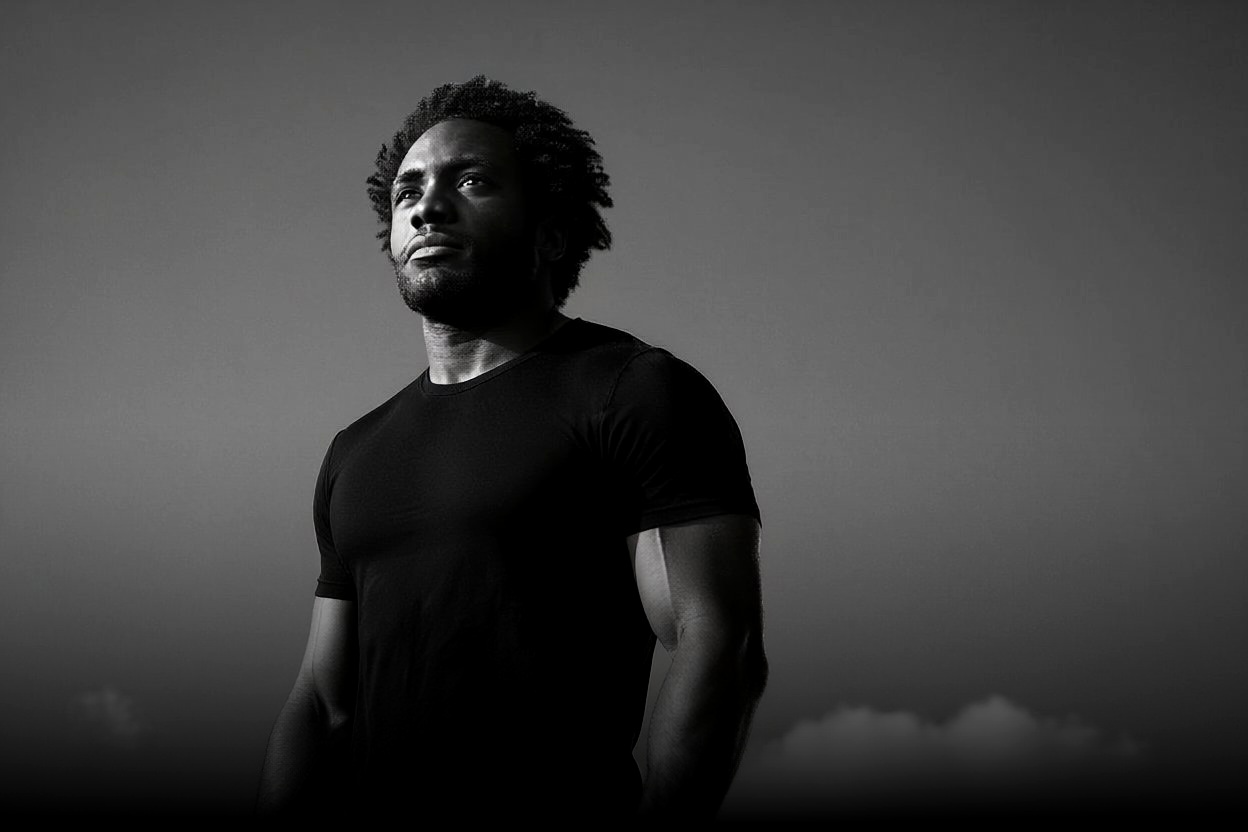
The Performance Years
I spent over two decades performing for a living. Literally. The wire. The stage. The lights. The moment before a show when your body knows exactly what it's supposed to do and you do it — because failing in public is not an option you've built into the script.
That life teaches you things. It teaches you discipline. Precision. How to show up when you don't feel like it. How to make something look effortless that took ten thousand hours to build.
It also teaches you something you don't realize until much later: how to disappear inside your own performance.
I was good at it. That was the problem. The better I got at performing, the less I knew where the performance ended and I began. Output became identity. Capability became worth. The applause wasn't just nice to have — it was the only mirror I trusted.
I didn't know I was performing off stage too. I thought that was just called being a man.
The Split
There were two of me for a long time.
One of them was excellent. He delivered. He knew what to say in a room and when to say it. He led well. He was the version people called on, referred to others, trusted with hard things. That version never seemed uncertain. He was useful, present, composed.
The other one drove home in silence.
He sat across from the people he loved most and felt a pane of glass between them — not because he didn't care, but because he didn't know how to be in the room without a role to play. When the performance was over, there was nothing left to stand on.
Most men I know have lived some version of this. Two selves: the one the world gets, and the one who's quietly exhausted by the weight of maintaining him.
For a long time, I assumed the solution was to get better at both. More discipline. More presence. More output. More. That's what we do when the performance stops working — we perform harder.
Fatherhood
I remember the moment I understood what was at stake.
I was with my kid. Nothing dramatic — just an ordinary evening, the kind that shouldn't mean anything. But I caught myself going through the motions. Present in the room, absent in the room. Performing fatherhood the same way I'd performed everything else: technically correct, emotionally elsewhere.
That landed differently than I expected.
I'd spent years perfecting the external. Career, credibility, contribution — I'd built the scaffolding of a meaningful life. But standing there, I realized I was handing my child a version of strength that would cost them something later. The same silence I'd inherited. The same gap between what we say we are and what we actually make available.
My father wasn't a bad man. He was a man who performed the role he was given. I understood that. I even respected it. But I could see the pattern clearly enough to know I didn't want to pass it forward unchanged.
That's when the work became personal in a different way. Not self-improvement. Not optimization. Something closer to repair.
Faith
I'm not going to perform faith for you.
What I can say is this: the language I needed to understand what was happening inside me didn't come from a podcast or a methodology or a men's group that talked about masculinity like it was a brand to build. It came from a tradition that had been holding these questions for a long time before I found them.
Stewardship. Presence. Faithfulness over performance. The idea that what you've been given is not yours to hoard or display — it's yours to tend.
That reframing didn't fix anything. But it gave me somewhere to stand while I figured out what needed to change. It slowed the performance down enough that I could see it for what it was.
Strength and surrender are not opposites. That took me longer to believe than I'd like to admit.
Why This Exists
I looked for a space that could hold what I was carrying.
Not therapy — though therapy has its place. Not a mastermind. Not a program that promised to optimize my morning or monetize my wounds. Something simpler and harder: a room where capable men could stop performing and tell the truth about what was actually happening.
I couldn't find it. So I built it.
What I Built
Unrehearsed Leaders is the room I needed.
I had mentors. I had a father. I had people who meant well and showed up in the ways they knew how. But I never had a space I could call safe outside of my own mind. A room where I didn't have to manage how I landed. Where the mask could come off — not to perform vulnerability, but just to breathe.
I'm not the only man who has felt that weight.
This is built for entrepreneurs, creatives, leaders — men in the becoming. Men who have built something real and still feel like they're hiding inside it. Men who want to stop shrinking themselves to fit rooms that were never built for who they actually are, and start living on their own terms — not by removing a layer of their truth, but by wearing it as a badge of honor.
I read once that the greatest act of bravery is to be yourself in a world that wants you to be someone else. That line has become a blueprint. Not an aspiration — a daily decision.
The man I'm becoming is the one who can finally look himself in the mirror. Not the performer. Not the provider. Not the version built for approval. The actual man.
That's who this is for.